The Handwriting Matters More Than the Recipe
Why the scrawl on a recipe card — the crossings-out, the smudges, the note in the margin — is the part worth keeping.
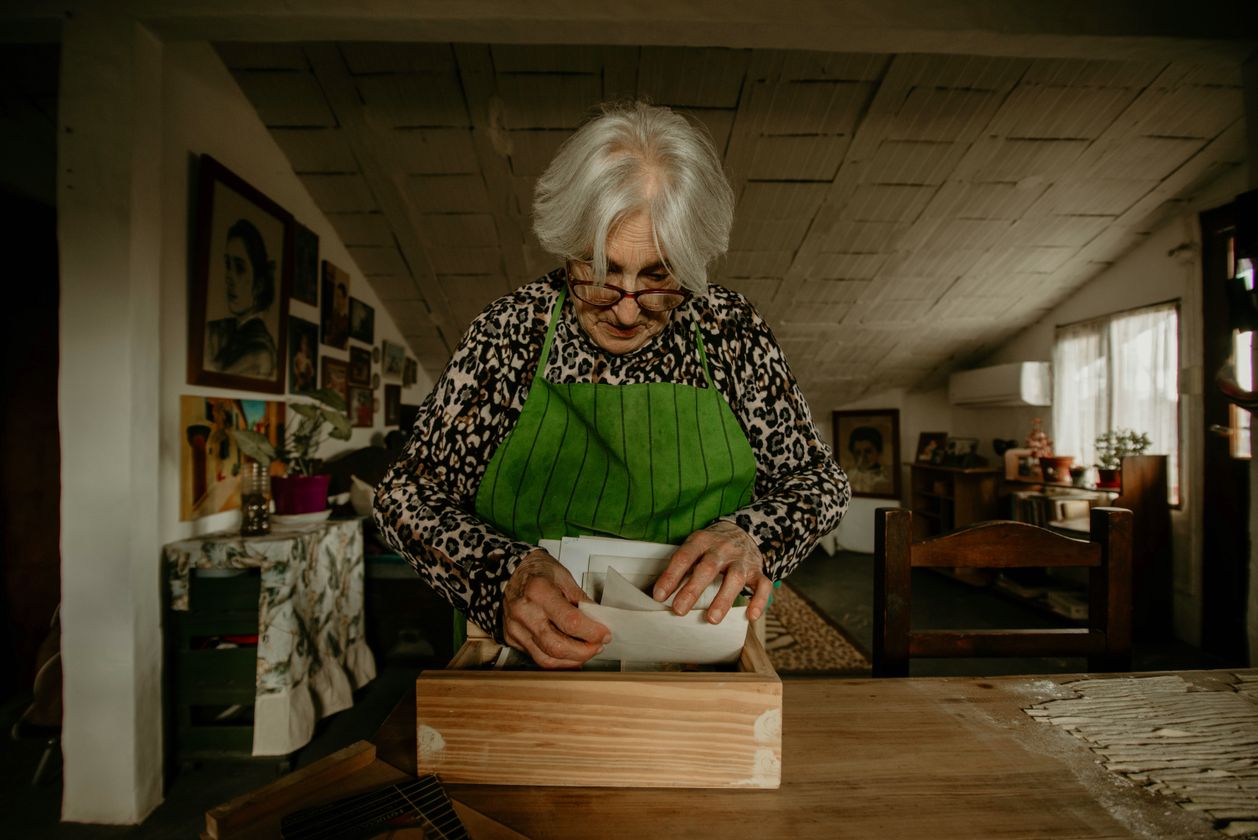
My grandmother kept her recipes in a tin box on top of the fridge. Most were written on the backs of other things — a gas bill from 1987, a church bulletin, the lined card from a florist that closed before I was born. A few were on proper index cards, the kind with a red rooster printed across the top. None of them were typed.
For years I assumed the real content of those cards was the recipe itself — the list of ingredients, the oven temperature, the order of operations. So when I first transcribed them into a spreadsheet, I felt responsible and modern. I was preserving them. I was making them searchable. I was protecting them from the tin box and the damp.
I was also, it turns out, throwing away almost everything that mattered.
What the transcription loses
The first thing you lose is the handwriting. My grandmother’s cursive leaned hard to the right, as though it were in a hurry to get somewhere. Her t’s were crossed with a single confident slash. She dotted nothing. You could tell from the pressure of the pen which lines she wrote first and which she added later, standing at the counter with flour on her fingers.
A spreadsheet flattens all of that into Helvetica 11. The flour is gone. The hurry is gone. What remains is correct, and lifeless.
The second thing you lose is the evidence of use. A recipe card that has been cooked from for forty years is a record of those forty years. There are stains that tell you which step splattered. There are corners softened by steam. There is a pencilled question mark next to “bake 35 minutes” that means somebody, at some point, found thirty-five minutes to be too long — and you will never know who, or which oven, or what they were baking instead.
A transcription cannot hold a question mark in pencil. It can hold the words, but not the doubt.
The crossings-out are the recipe
The most important thing on my grandmother’s card for lemon icebox pie is a crossing-out. She originally wrote “1 can condensed milk.” Then she scratched that out and wrote, above it in smaller letters, “1 ¼ cups — the big can, not the small one.” That correction is the whole story. It tells you she made it wrong once. It tells you she figured out why. It tells you that the recipe, as written, had lied to her, and that she fixed it with a pen rather than a new card.
When you cook from a card like that, you are cooking from a conversation. You are in the room with every version of the dish that came before. The card is not a set of instructions; it is the residue of attention paid over decades.
I think about this every time I’m tempted to “clean up” a recipe before I share it. The clean version is easier to read. The clean version photographs better. But the clean version is also the one that forgets which size can of milk, and why, and who noticed.
What to keep
So here is what I try to keep, now, when I move a recipe from a card to the screen:
Keep the crossings-out. If the card says one thing and then says another, say both. The change is the recipe.
Keep the stains. Not literally, on the screen — but describe them. “This step always splatters.” “The corner is soft from steam.” A sentence of context is worth a photograph.
Keep the handwriting, or at least the fact of it. Name the person whose hand wrote the card. Say whether they wrote fast or slow, in pencil or in ink. The hand is part of how the recipe tastes.
Keep the question marks. If somebody doubted the oven temperature, doubt it too, at least the first time. Bake it at thirty-five minutes and watch it. The doubt is inherited knowledge, passed down in pencil.
The tin box is the point
The spreadsheet is useful. I still keep one. But the tin box is the point, and the tin box is not a filing system. It is a archive of the way my grandmother paid attention. It records what she changed, what she wondered about, what she spilled. It records, in a way no database can, that she was there.
The recipes on this site begin from that idea. Where a card exists, I will tell you about the card. Where someone’s hand is on the page, I will tell you whose. Where there is a crossing-out, I will leave the crossing-out in.
The food matters. The handwriting matters more.